A2L & A3 Class Vacuum Pump
| Brand: | Aircon Tools |
| Product Code: | A3-class-vacuum-pump |
-
£139.99 VAT incl.
Available Options
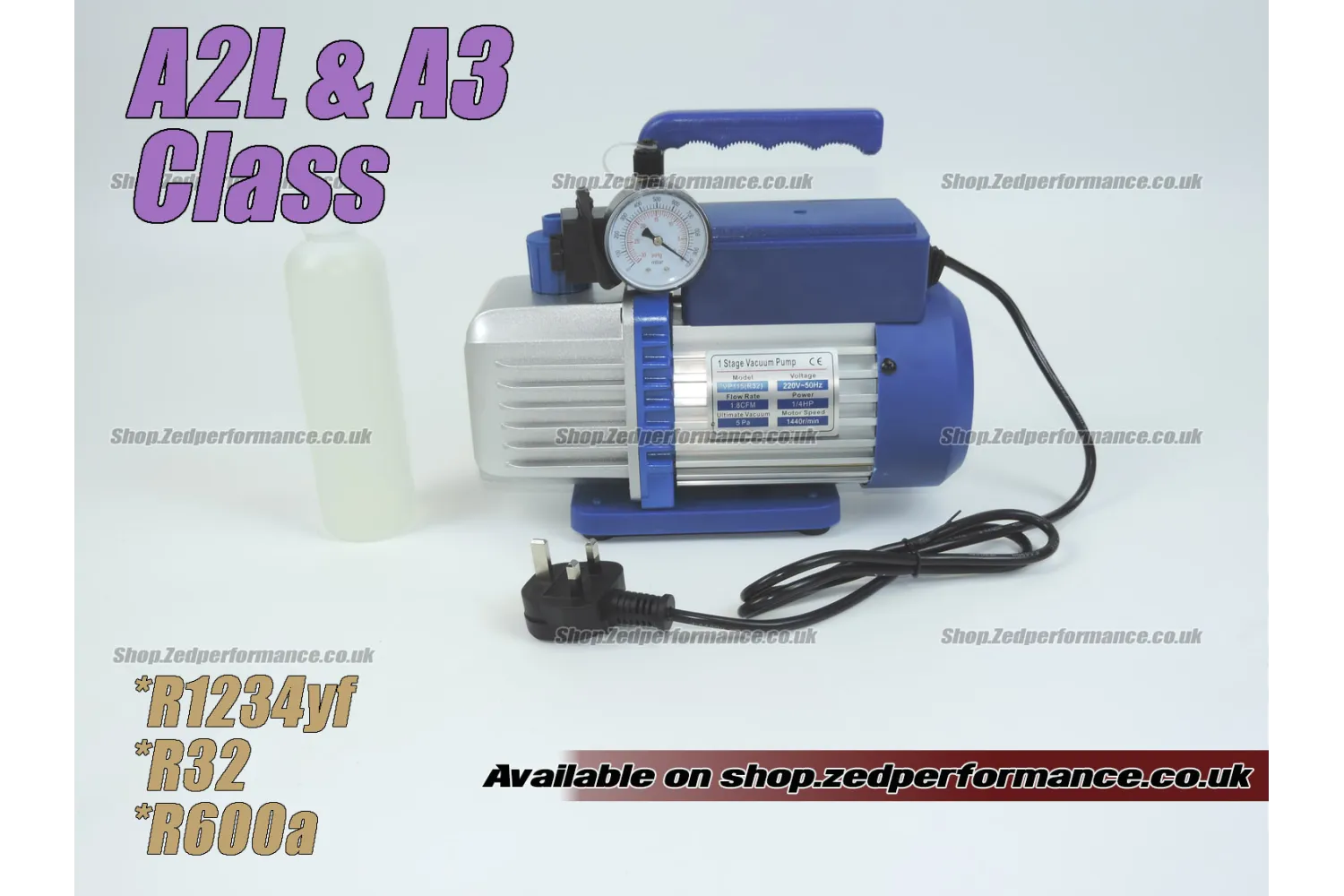
HVAC Vacuum Pump with Solenoid Valve and Vacuum Gauge
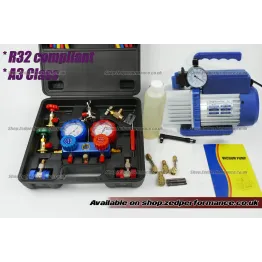
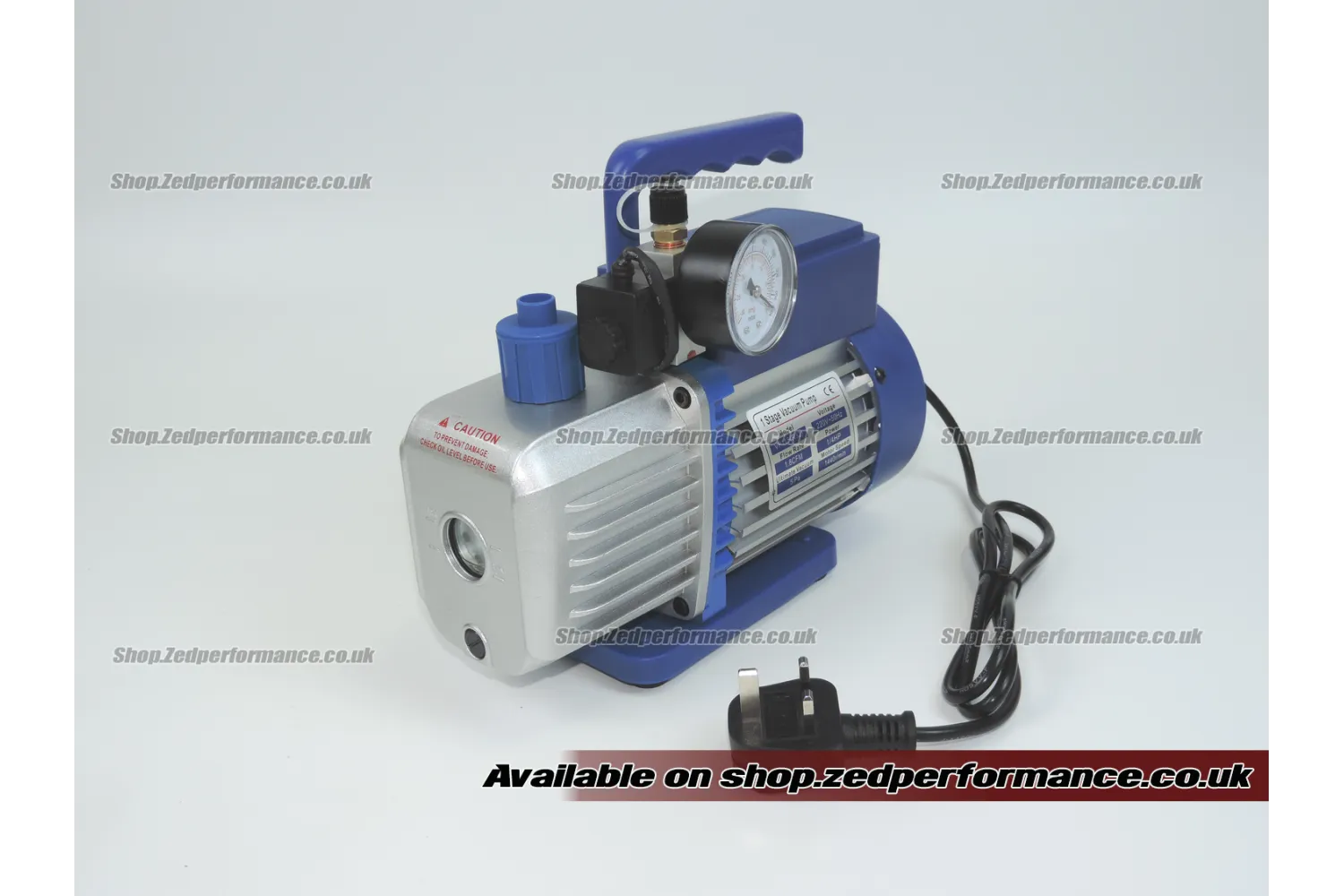
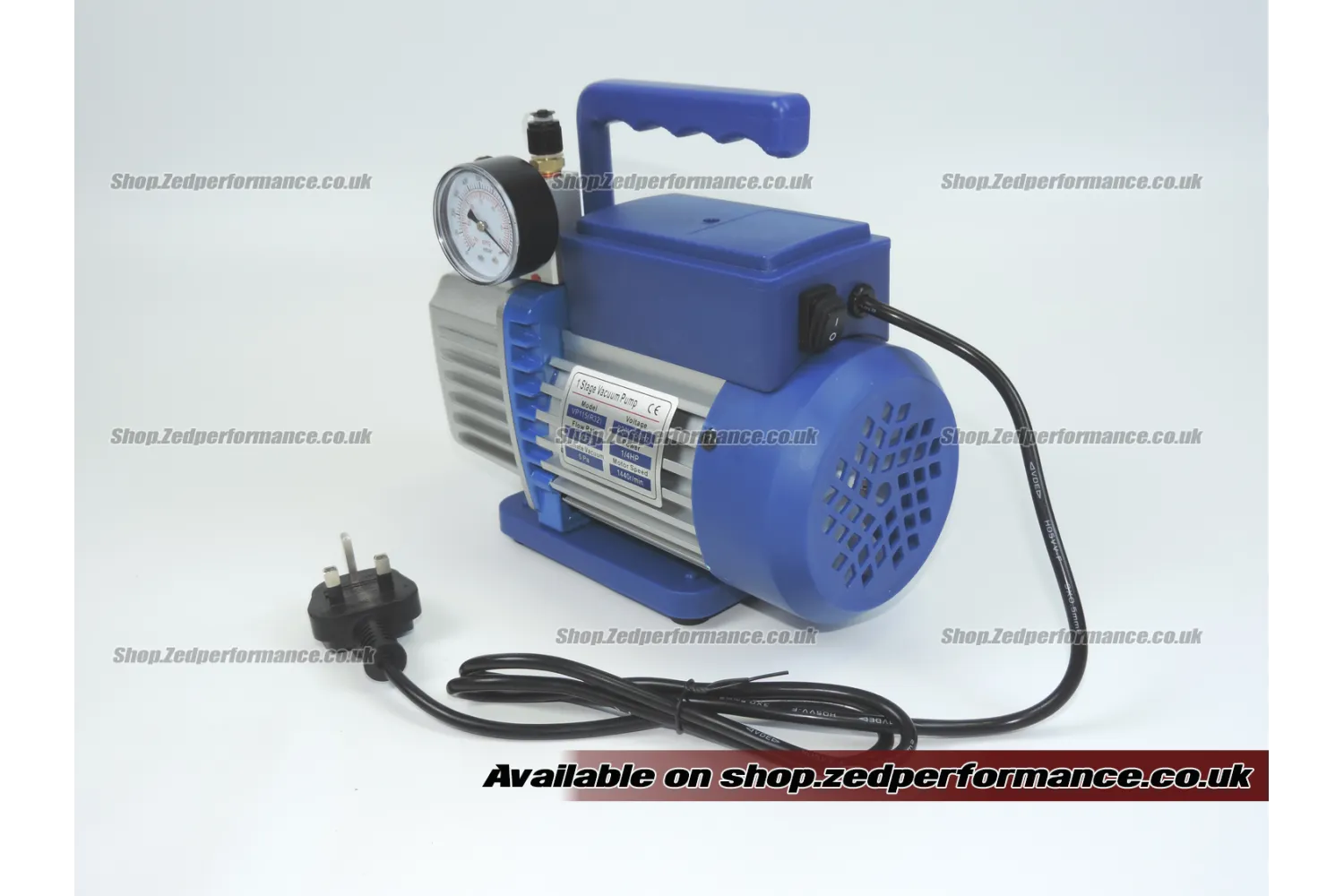
We supply this 51 L/min vacuum pump for evacuating compatible air conditioning, heat pump and refrigeration systems during installation or repair. You recieve the pump with a built-in solenoid isolation valve, vacuum gauge, UK plug and vacuum pump oil.
Applications include automotive air conditioning, domestic split AC systems, heat pumps, refrigerators and freezers. Check the pump manufacturer's approval for the refrigerant and application before use.
Features
- Built-in solenoid valve to isolate the pump when switched off.
- Vacuum gauge for a basic indication of vacuum level.
- Direct-drive motor.
- Oil sight glass with minimum and maximum markings.
- ON/OFF switch.
- Non-slip cushioned carrying handle.
- Vacuum pump oil included.
Specifications
- Electrical supply: 220–240 V / 50 Hz.
- Plug: UK plug.
- Flow rate: 51 L/min / 1.8 CFM.
- Specified ultimate vacuum: 5 Pa / 0.05 mbar.
- Motor speed: 1,400 rpm.
- Motor power: 1/4 HP.
- Oil capacity: 300 ml.
- Dimensions: 10.5 × 4.5 × 8.5 inches.
Evacuation after installation or repair
Opening a refrigeration circuit allows air and moisture to enter. The pump removes air and other non-condensable gases. Reducing the pressure also allows moisture to evaporate so it can be drawn out of the system.
Evacuate after completing the specified pressure leak test and before charging or releasing the system's refrigerant charge. Follow the equipment manufacturer's procedure for the particular installation.
Pump flow rate and ultimate vacuum describe different things. The flow rate indicates pumping capacity. The ultimate vacuum is the pump's specified limiting pressure under test conditions. Neither figure guarantees the vacuum reached inside a connected system.
Solenoid isolation valve
The solenoid valve closes the connection between the pump and the system when the pump is switched off. This helps isolate the pump and limit vacuum loss or oil flowing back towards the system.
Use the appropriate system-side isolation valves when carrying out a standing vacuum test. Check that the gauge remains connected to the system being tested rather than only to an isolated hose or pump connection.
Reading the vacuum gauge
The built-in gauge provides a basic vacuum indication. Movement back towards atmospheric pressure after isolation can indicate a leak, remaining moisture or gas being released from internal surfaces. Leaking hoses and tool connections can also afect the reading.
A steady needle does not confirm that the system is dry or has reached the required deep vacuum. Use a separate micron gauge connected to the system to measure evacuation acurately. Follow the manufacturer's target pressure and standing vacuum requirements rather than relying on a fixed pumping time.
A micron gauge is required seperately for this measurement. A vacuum holding check does not replace the specified pressure leak test.
A2L and A3 refrigerant applications
A2L and A3 are refrigerant safety classifications. Before using this pump with either class confirm its suitability in the manufacturer's documentation. The solenoid valve and vacuum gauge alone do not establish approval for flammable refrigerants.
- A2L: lower-flammability refrigerants including R32 and R1234yf.
- A3: higher-flammability refrigerants including R290 propane and R600a isobutane.
Use hoses, gauges, adaptors and other connected equipment suitable for the refrigerant and application. Follow the applicable ventilation and ignition-control procedures.
Evacuation only
This pump is not a refrigerant recovery machine. Recover any existing refrigerant using suitable recovery equipment before evacuation. Do not use the vacuum pump to remove a refrigerant charge or draw liquid refrigerant through it.
Oil checks
Check the oil level before use and keep it within the sight glass markings. Use the specified vacum pump oil and replace contaminated oil according to the pump instructions. Moisture-contaminated oil can reduce evacuation performance.
Do not operate the pump without sufficient oil. Follow the pump and system manufacturers' instructions throughout the job.